Appraisal vs Assessment: What’s the Difference?
March 14, 2026
7 minutes
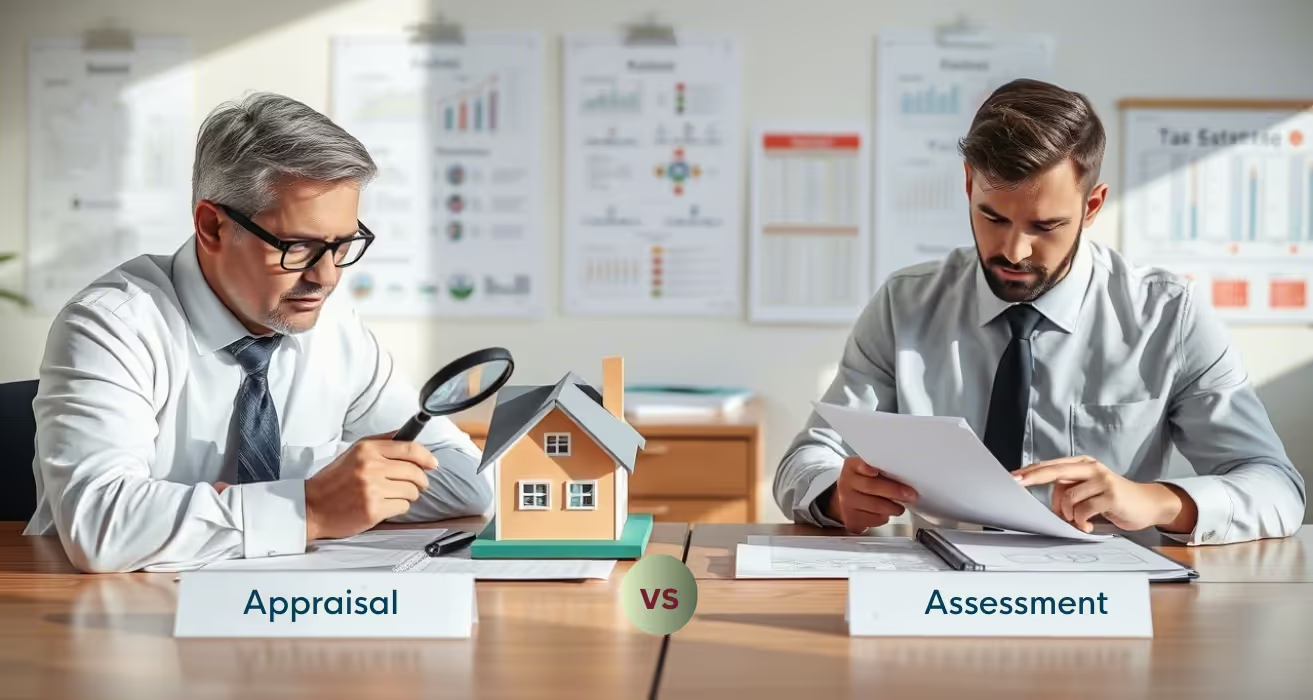
Buying a home is a thrilling milestone, but the avalanche of jargon can be overwhelming. Two terms often confused are "appraisal" and "assessment." They sound similar, but they serve completely different purposes.
Heads up: Mistaking one for the other could cost you thousands. Don't worry, we’ve got you. In this guide, we’ll sort through the confusion, break down what each term means, and help you feel like a pro by the end.
Appraisals protect your lender; assessments impact your taxes. Let's dive in.
Key Takeaways:
- An appraisal determines a property's current market value, typically for lending purposes.
- An assessment assigns a value for property tax purposes, often different from market value.
- Lenders require an appraisal; local governments use assessments.
- Both impact your financial planning: appraisals affect your mortgage, and assessments influence your taxes.
- Knowing the difference empowers smarter home buying decisions.
What Is a Home Appraisal?
Definition: An appraisal is a professional, unbiased estimate of a home's fair market value, typically ordered by lenders during the mortgage approval process.
Why it Matters:
- Ensures the property is worth the loan amount.
- Protects the lender (and you) from overpaying.
- Critical for final mortgage approval.
Pro Tip: Appraisals must be performed by a licensed or certified appraiser following the Uniform Standards of Professional Appraisal Practice (USPAP).
Key Components of an Appraisal:
- Recent comparable sales ("comps")
- Property condition and features
- Location desirability
- Market trends.
Example: You’re buying a home for $400,000. The appraiser values it at $390,000. Your lender may require you to renegotiate, bring extra cash, or cancel.
Heads Up: If the appraisal comes in lower than expected, it’s not the end. You can appeal the appraisal or request a second opinion.
Bundle your agent and mortgage. Save an average of $10,000.
Don't have an agent yet? Pair your reAlpha mortgage with a reAlpha agent, and you could get up to 1.5% cash back at closing.

What Is a Property Assessment?
Definition: An assessment is a value assigned to your property by a government tax assessor to calculate your annual property taxes.
Why it Matters:
- Determines how much you owe in property taxes.
- Updated periodically (annually or after significant improvements).
Key Components of an Assessment:
- Mass appraisal techniques
- Property size, location, and use
- Standardized valuation methods.
Important: The assessed value often differs from market value. It’s usually lower.
Example: Your county assesses your home at $320,000 for tax purposes, even though the market value is $400,000.
Pro Tip: You have the right to appeal your property assessment if you believe it’s too high.
Key Differences Between Appraisal vs Assessment
| Feature | Appraisal | Assessment |
|---|---|---|
Purpose | Estimate the market value for the loan | Set the property tax value |
Conducted By | Licensed appraiser | Government assessor |
Frequency | During transactions (or refi) | Annually or semi-regularly |
Impact On | Mortgage approval | Property taxes |
| Value Basis | Recent sales & market trends | Standardized formulas |
Why Understanding Both Matters?
- Mortgage Loans: Appraisals directly influence how much your lender will finance.
- Tax Planning: Assessments help you anticipate your yearly property tax bills.
- Home Value Knowledge: Knowing both values can reveal equity opportunities.
Pro Tip: Always request a copy of both your appraisal and your latest assessment after purchase; knowledge is leverage.
Conclusion: Your Next Move Toward Smarter Homeownership
Buying a home is a big decision - and having the right information puts you ahead. But the real advantage comes from pairing smart research with a smarter way to buy.
When you use a reAlpha real estate company, you can be eligible to receive up to 1% of the home purchase price back as a credit at closing. Add reAlpha Mortgage, and that Cashback can increase to up to 1.5% back, helping offset closing costs and keep more money in your pocket when it matters most.
The Cashback is simple, transparent, and applied directly at closing - no complicated hoops, no delayed payouts. Just real savings tied to using a fully integrated homebuying experience.
See how much you could save:
- Check your eligibility
- Explore homes that fit your budget today.
- Your next move could come with thousands back at closing.
- Estimate your savings → Rebate Calculator
Ready to buy smarter? Explore your savings at reAlpha Mortgage.
Buying a Home? Get up to 1.5% Cash Back at Closing
Get pre-approved first, then start exploring homes knowing you can receive up to 1.5% of the home price back at closing.

FAQs
What is the main difference between an appraisal and an assessment?
An appraisal estimates current market value for lending; an assessment determines property value for taxation.
Does a higher assessment mean a higher market value?
Not necessarily. Assessed values often lag behind true market conditions.
Can I dispute my property assessment?
Yes. You can usually appeal through your local tax authority if you believe your assessed value is inaccurate.
Do I need an appraisal if I have an assessment?
Yes. Lenders require a fresh, independent appraisal to approve a mortgage; assessments alone don't cut it.
Who pays for the appraisal?
Typically, the buyer covers the appraisal cost as part of closing fees.
Get the latest market trends, homebuying tips, and insider updates—straight to your inbox. No fluff, just the good stuff.
Article by
As a great communicator with excellent negotiation skills, I focus more on establishing unbreakable ties between my clients, as opposed to just helping them achieve their real estate dreams. As a representative of both buyers and sellers, I understand how to lead a transaction process to ensure that the needs of both are met. My track record speaks for itself. Since I ventured into the industry in 2013 as a realtor, I have not only helped many buyers land perfect homes, but I have also assisted tons of owners and investors build wealth.
Related Topics
October 10, 2026
October 8, 2026
October 8, 2026
October 6, 2026
September 30, 2026
September 30, 2026