The Best Places to Live in California in 2026 (And What It Actually Costs to Buy There)
June 26, 2026
8 minutes
You already have the Redfin tab open. You've filtered by price, scrolled past a dozen listings that felt wrong for reasons you can't fully articulate, and now you're wondering whether you're looking at the right city at all.
That's the actual problem with buying in California. It's not that information is scarce - it's that most of it was written for someone deciding where to vacation, not where to sign a 30-year mortgage. "Vibrant neighborhoods." "Walkable downtown." "Thriving arts scene." None of it tells you what a $750,000 purchase actually looks like in monthly terms, or how a particular market will treat you on offer day.
This guide is built differently. Six California cities, evaluated through one lens: what it's like to buy a home there in 2026. Real median prices. Real market dynamics. A clear read on who each city is actually right for - and one honest watch-out per market that most city guides quietly skip.
According to the National Association of Realtors' 2025 Profile of Home Buyers and Sellers, 59% of buyers cite neighborhood quality as the single most important factor in a purchase decision - ranking above schools, commute time, and even price. We built this framework around that reality.
Bundle your agent and mortgage. Save an average of $10,000.
Don't have an agent yet? Pair your reAlpha mortgage with a reAlpha agent, and you could get up to 1.5% cash back at closing.
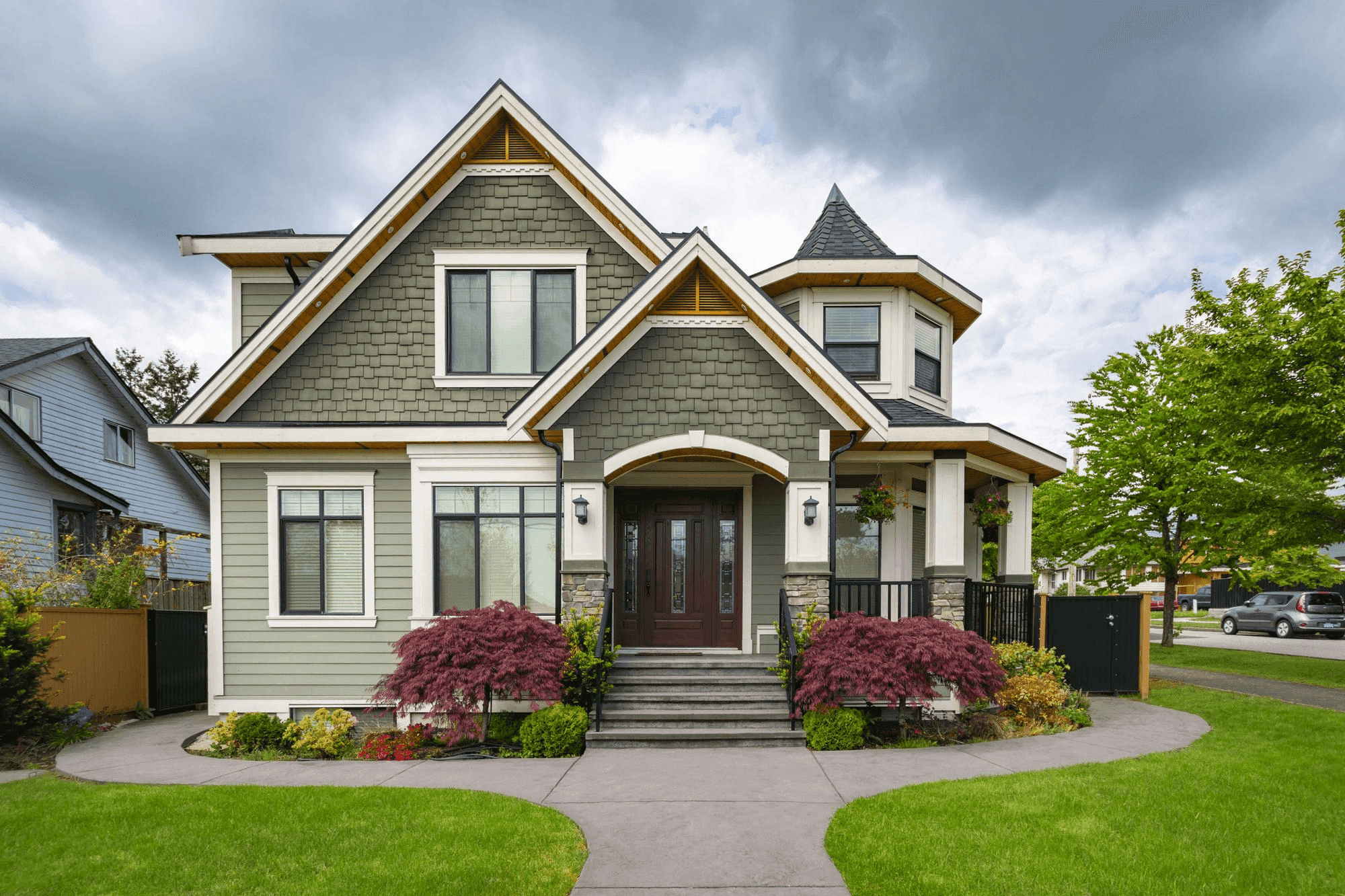
The Best California Cities for Homebuyers in 2026
San Diego - Coastal market, strong employment base, premium entry point
San Diego delivers what California promises: year-round mild weather, walkable neighborhoods, and a job market anchored by defense, biotech, and a growing tech sector. It's one of the few California markets where the lifestyle case and the investment case are genuinely hard to separate.
The median sale price as of early 2026 sits in the upper $800,000s to low $900,000s depending on submarket, with coastal neighborhoods in La Jolla, Del Mar, and Mission Hills commanding significantly more (Source: Redfin, US Housing Market, January 2026). North County - Carlsbad, Encinitas, Oceanside - gives buyers more square footage at a modest discount, with strong school systems and easier freeway access.
Who it's right for: This market works best for buyers with a $150,000–$200,000+ down payment who want a long-term hold in a market with constrained supply and durable demand. Relocation buyers from the Bay Area who want lower prices with comparable lifestyle quality. Remote workers whose income isn't tied to San Diego's local employment base.
One honest watch-out: San Diego's competitive offer environment hasn't fully cooled. Well-priced homes in established neighborhoods still move quickly. If your offer depends on a long contingency window, you may need patience - or flexibility on neighborhoods.
Sacramento - Space, affordability, and California weather without Bay Area prices
Sacramento is the most frequently underestimated city on this list. It is the state capital, a genuine food and arts destination, and one of the only California markets where a $500,000–$600,000 budget still buys a three-bedroom house with a yard. The median sale price for the Sacramento metro hovered around $490,000–$530,000 in early 2026 (Source: Redfin, US Housing Market, January 2026) - roughly half of what the same money gets you in San Jose.
The city's job market is anchored by state government, healthcare, and an emerging tech presence. High-speed rail development between Sacramento and San Francisco has raised the profile of suburbs like Elk Grove, Folsom, and Roseville, which offer newer construction, top-rated school districts, and a quieter pace.
Who it's right for: Buyers being priced out of the Bay Area but not ready to leave Northern California. Families prioritizing space and school quality over neighborhood density. Remote workers who want California weather and a reasonable cost base.
One honest watch-out: Sacramento's summers are genuinely hot - consistently over 100°F for weeks at a time. If you're relocating from a coastal city, factor in year-round air conditioning costs and utility bills that won't appear in a monthly payment estimate.
San Jose / Silicon Valley - High prices anchored by one of the strongest job markets in the country
San Jose and its surrounding cities - Sunnyvale, Cupertino, Mountain View, Santa Clara - represent the highest-stakes homebuying market in California. The median sale price in the San Jose metro was approximately $1.3M–$1.5M in early 2026 depending on specific submarket (Source: Redfin, US Housing Market, January 2026). Entry-level condos in well-regarded areas start in the $700,000s. Single-family homes in top school districts routinely see competitive offers above asking.
What justifies those numbers is the employment concentration. Silicon Valley's job market commands compensation packages that make the math work for buyers who are employed there at senior levels. The same home that looks unaffordable at a national median income becomes a different calculation when household income is $300,000–$400,000+.
Who it's right for: Buyers whose income is generated locally in the tech sector or adjacent industries - and who are planning a long hold. Buyers making a deliberate trade: smaller space in exchange for proximity to employers and a top-tier school ecosystem.
One honest watch-out: The market's sensitivity to interest rate movement and tech-sector employment is higher here than anywhere else in the state. Values that rose sharply can correct sharply. Buyers who have done well here bought with a long horizon. The market rewards patience and punishes over-leveraged short holds.
Irvine / Orange County - Planned communities, top-rated schools, strong walkability scores
Irvine consistently ranks among the safest and most walkable cities in California, and its school district - Irvine Unified - is among the most consistently high-performing in the state. The city was master-planned from the ground up, which gives it a physical coherence that older cities lack: dedicated bike paths, neighborhood parks within walking distance of most homes, and a commercial layout that functions well without a car.
The median home price in Irvine in early 2026 was approximately $1.1M–$1.3M for single-family homes, with condos and townhomes available in the $700,000–$900,000 range (Source: Redfin, US Housing Market, January 2026). Surrounding Orange County cities - Irvine adjacent Tustin, Lake Forest, and Mission Viejo - offer comparable quality at a modest discount.
Who it's right for: Buyers for whom school quality is a primary driver and who are willing to pay for the certainty of a top-rated district. Buyers who want a walkable, planned environment without the density of Los Angeles proper. Orange County professionals who work in the Irvine Spectrum, South Coast Metro, or Airport Area business corridors.
One honest watch-out: Irvine's planned aesthetic comes with an HOA in most communities. HOA fees in Irvine range from approximately $75–$400/month for single-family homes to $300–$900+/month for condos, with high-rise units reaching $1,400–$2,000/month. depending on the development - a real cost that doesn't appear in a mortgage payment estimate. Always factor it into your total monthly housing number before your offer.
Riverside / Inland Empire - The strategic choice for buyers who've done the math
Riverside and the broader Inland Empire - Ontario, Rancho Cucamonga, Moreno Valley, San Bernardino - is not a consolation prize for buyers who couldn't afford coastal California. It's a deliberate trade: accept a longer commute to coastal employment centers in exchange for substantially more home for your money.
The median sale price in the Riverside metro in early 2026 was approximately $490,000–$560,000 (Source: Redfin, US Housing Market, January 2026). That buys a four-bedroom house with a garage and yard in most Inland Empire markets - a configuration that simply doesn't exist at that price point anywhere west of the 15 freeway.
The Inland Empire is home to one of the country's largest logistics and warehousing employment bases - over 200,000 transportation and warehousing workers at its post-pandemic peak (Matthews, Q3 2025) which means the local job base is no longer entirely dependent on commuters. Healthcare and manufacturing are also significant employers.
Who it's right for: Buyers with flexible work schedules or remote-first roles who want maximum square footage and outdoor space at a California price point. First-time buyers who want to build equity in a market with genuine appreciation potential before moving to a higher-cost area.
One honest watch-out: The commute to LA or Orange County employment is real - often 60–90 minutes each way depending on traffic. If you're going into an office three or more days a week, be specific about which exit you'll be driving past at 7:30 a.m. before you commit.
Fresno - The market most California homebuyers overlook
Fresno sits in the geographic center of California, roughly three hours from San Francisco and Los Angeles, and under two hours from Yosemite, Sequoia, and Kings Canyon . Its profile among homebuyers has been quietly rising: the market offers some of the lowest median prices in the state, a growing healthcare and higher-education sector anchored by UCSF Fresno and Fresno State, and access to outdoor recreation that coastal cities can't match.
The median sale price in the Fresno metro in early 2026 was approximately $330,000–$380,000 (Source: Redfin, US Housing Market, January 2026). That is among the lowest entry points of any sizable California city, and it translates to monthly payment estimates that are meaningfully different from the rest of this list.
Infrastructure investment - including expanded rail and logistics hubs - has increased employment options, and remote work has made Fresno viable for workers with no geographic constraint on their employer.
Who it's right for: Buyers who are geographically flexible and want to maximize what their money buys in California. Remote workers who want outdoor access, low cost of living, and a real community. Buyers who are willing to be early in a market that most coastal Californians haven't fully discovered yet.
One honest watch-out: Fresno's air quality is a material concern. The San Joaquin Valley has some of the nation's worst air quality, failing to meet federal standards for both ozone and particulate pollution, per the EPA and California Air Resources Board , driven by agricultural activity, geography, and traffic. For buyers with respiratory sensitivities, research specific air quality data for your target neighborhoods before committing.
Buying a Home? Get up to 1.5% Cash Back at Closing
Get pre-approved first, then start exploring homes knowing you can receive up to 1.5% of the home price back at closing.

2026 California City Comparison
| City | Median Home Price (est.) | Monthly Payment est. | Best For | One Watch-Out |
|---|---|---|---|---|
San Diego | ~$875,000 | ~$4,700 | Coastal lifestyle, long-term hold | Competitive offer environment |
Sacramento | ~$510,000 | ~$2,750 | Affordability, space, Bay Area alternative | Summer heat, utility costs |
San Jose | ~$1,400,000 | ~$7,500 | Tech sector buyers, top schools | Market sensitivity to rate + employment shifts |
Irvine | ~$1,200,000 | ~$6,450 | Walkability, school quality, planned environment | HOA fees add to monthly costs |
Riverside / IE | ~$525,000 | ~$2,825 | Space, equity building, remote workers | Commute to coastal employment |
| Fresno | ~$355,000 | ~$1,910 | Value, outdoor access, geographic flexibility | Air quality concerns |
Monthly payment estimates assume 20% down payment and a rate reflective of market conditions at time of publication. For illustration only. Contact reAlpha Mortgage for your actual rate. reAlpha Mortgage NMLS #1743790.
What the Homebuying Process in California Actually Looks Like
The payment estimate in the table above captures principal, interest, and an assumed down payment. It does not capture what California specifically adds to the monthly cost of ownership - and that gap matters.
What most homebuying articles don't tell you about the process
In most states, a real estate transaction involves three parties who mostly work independently: your agent, your lender, and a title or closing company. You are the connective tissue. You relay updates, follow up on paperwork, and discover what's missing when someone calls you at 4 p.m. on the day before closing.
- California's escrow process adds a distinct layer: escrow is handled by a neutral third party, not an attorney, and the timelines run longer than most states - typically 30–45 days but often extending depending on the property type and transaction complexity. Disclosure requirements are among the most extensive in the country. You'll receive a Natural Hazard Disclosure Report, a Transfer Disclosure Statement, and potentially several additional seller disclosures that require review before you're committed.
- Offer contingencies - inspection, appraisal, loan - are standard, but California's competitive markets apply real pressure to waive or shorten them. An experienced real estate agent who knows how to structure contingencies in a specific market is not a nice-to-have here. It's the difference between an offer that gets accepted and one that doesn't.
- The coordination overhead - tracking escrow timelines, following up on loan conditions, managing disclosure review - is where California purchases get complicated. Buyers who have done it before know the feeling of holding too many threads. Buyers who haven't done it in California yet are about to find out.
Buying a Home in California - What's Different Here
If you're relocating from Texas, Florida, or most other states, a few California-specific mechanics are worth knowing before your first offer.
Offer timelines and contingency norms in California markets
California contracts use standard CAR (California Association of Realtors) forms, which include default inspection, appraisal, and loan contingency periods - 17 days for inspection, 17 days for appraisal, and 21 days for loan approval - per the C.A.R. Residential Purchase Agreement (RPA), Sections 14 and 3L. In competitive markets, sellers often request shortened contingency periods or ask buyers to waive specific contingencies as part of a competitive offer.
How aggressive you need to be with contingencies depends heavily on the specific market and price point. A $500,000 home in Sacramento's slower-moving outer suburbs is a different negotiation than a $1.4M home in Cupertino with three offers on day one. Your real estate agent's read on that specific listing matters more than any general advice about California contingencies.
What to expect from escrow in California
California is an escrow state - a neutral third-party escrow company manages the transfer of funds and documents, and neither side's attorney manages closing. This is different from attorney-close states like New York and Florida, and it shifts some of the coordination responsibility to the buyer and their team.
During escrow, you'll receive and need to review a substantial amount of documentation. The Natural Hazard Disclosure Report alone flags earthquake fault zones, flood zones, fire hazard severity zones, and seismic hazard zones relevant to the specific property. This is not boilerplate - it is specific to the address and requires a real read before you sign off.
Your agent and loan officer should be coordinating directly with the escrow company throughout. If you find yourself calling escrow directly to find out what's happening, that's a sign the coordination process has broken down.
How reAlpha Helps You Buy Smarter in California
California is rebate-eligible. That means every homebuyer who works with reAlpha in California - a state where reAlpha Realty operates and where cash back at closing is permitted by law - has access to the full platform.
reAlpha is publicly traded on NASDAQ (AIRE) - the savings figures and platform capabilities you see in this article are subject to public disclosure standards, not marketing copy.
One platform. Every step.
Search, real estate, mortgage, title, and closing are connected in one platform (CLAIM-006). Instead of managing your agent, your lender, and escrow as three separate relationships running on three separate timelines, your reAlpha team - a real estate agent, a reAlpha Mortgage loan officer, and Claire, your AI - works together inside the Homebuying Hub from the day you start looking.
When a buyer in Sacramento was comparing that city against San Diego, she opened Claire and typed one question: "What would my monthly payment look like in Sacramento versus San Diego on a $550,000 versus $850,000 purchase?" Claire surfaced both estimates, flagged the cash-back difference between the two markets based on home price, and scheduled a call with her loan officer within the same conversation. That's the platform working the way it's designed to.
Your homebuying team is already in sync
Your real estate agent and your reAlpha Mortgage loan officer share context from day one. When your lender knows what neighborhoods you're considering, and your agent knows where your pre-approval stands, the process moves. You stop being the relay between them.
The Homebuying Hub is your homebase: to-do lists, team contacts, documents, and your progress bar tracking every step from budget planning to keys - all in one place, on your phone or laptop, on your schedule.
Cash back at closing
reAlpha homebuyers save an average of $10,000 (CLAIM-001). When you bundle real estate and mortgage services through the platform, you can get up to 1.5% cash back at closing (CLAIM-002). That savings is applied as a credit at closing - it reduces what you bring to the table on closing day.
California's median home prices mean that 1.5% carries real weight. On an $875,000 San Diego purchase, the math matters.
See how much you could save buying in California - your savings estimate is waiting in the Homebuying Hub before you commit to anything.
FAQs
Is California still a good place to buy a home in 2026?
That depends on which California and what you mean by "good." For buyers in Sacramento, Fresno, or the Inland Empire, entry-level pricing has remained accessible relative to coastal markets, and those markets offer genuine appreciation potential. For coastal buyers in San Diego, Los Angeles, or the Bay Area, the investment case requires a long time horizon - typically five years or more to see meaningful equity after transaction costs. The strongest case for buying in California in 2026 is not speculative; it's structural: the state has a persistent housing supply constraint that tends to support values over time.
What is the most affordable city to buy a home in California in 2026?
Of the major California metros, Fresno consistently offers the lowest median home prices - approximately $330,000–$380,000 in early 2026. The Inland Empire (Riverside, San Bernardino metro) is a close second, offering more square footage per dollar than any coastal market at comparable price points. Sacramento offers the strongest combination of affordability and urban amenity for buyers unwilling to trade entirely on price.
How does California's escrow process work, and how is it different from other states?
California uses a third-party escrow model rather than attorney closings (as used in New York, Florida, and many other states). A neutral escrow company manages the transfer of funds and documentation between buyer, seller, and lender. The process typically runs 30–45 days and involves substantial disclosure documentation specific to California - including natural hazard reports, transfer disclosures, and local addenda. Your real estate agent should be coordinating with escrow throughout; if you're doing that coordination yourself, something has gone sideways.
How does reAlpha's cash back at closing work in California?
California is fully eligible for reAlpha's cash back at closing program - the state permits buyer rebates by law, and reAlpha Realty operates there. When you buy with reAlpha's real estate services, you can receive up to 1% cash back at closing. When you bundle real estate and mortgage through the platform, that increases to up to 1.5%. The savings is applied as a credit at closing - it reduces your closing costs rather than arriving as a post-closing check. reAlpha homebuyers save an average of $10,000. To see your specific estimate, ask Claire or start in the Homebuying Hub.
Do I need a large down payment to buy in California?
The required down payment depends on loan type and lender, not on California specifically. Conventional loans typically require 5%–20% down. FHA loans allow 3.5% with qualifying credit. VA loans (for eligible Veterans and service members) allow 0% down. reAlpha Mortgage has access to a network of 100+ lenders across conventional, FHA, VA, USDA, and more, which means your loan officer can find the right match for your situation rather than defaulting to one product. The bigger California-specific reality is that the raw dollar amount of a down payment scales with the median price - 5% of a $900,000 San Diego home is $45,000, which is a real number to plan around.
Source
National Association of Realtors, "2025 Profile of Home Buyers and Sellers" - used in Introduction
Get the latest market trends, homebuying tips, and insider updates—straight to your inbox. No fluff, just the good stuff.
Article by
As a great communicator with excellent negotiation skills, I focus more on establishing unbreakable ties between my clients, as opposed to just helping them achieve their real estate dreams. As a representative of both buyers and sellers, I understand how to lead a transaction process to ensure that the needs of both are met. My track record speaks for itself. Since I ventured into the industry in 2013 as a realtor, I have not only helped many buyers land perfect homes, but I have also assisted tons of owners and investors build wealth.