Best Suburbs in Miami, FL - 2026 Buyer Guide
April 2, 2026
14 minutes
In 2026, the conversation around the best suburbs in Miami is no longer just about beach access or skyline views. It’s about security, schools, insurance costs, commute reliability, and long-term value. As the broader Miami metro evolves, more buyers are choosing suburban communities that consistently rank among the best places to live near Miami for stability and long-term alignment.
Population growth, corporate relocations, infrastructure expansion, and moderating mortgage rates are reshaping demand patterns. Families are weighing A+ school zones against commute times. Investors are balancing appreciation potential with insurance risk. And long-term homeowners are prioritizing construction quality and neighborhood fundamentals over cosmetic upgrades. For many relocating families, the best suburbs near Miami offer stronger school zoning and lower volatility than the urban core.
This 2026 Buyer Guide breaks down what’s driving momentum across the Best Suburbs in Miami, where value is strongest, where value is strongest, how neighborhoods are trending, and what practical strategies matter most in today’s market.
State & Metro Context: Why Suburbs Near Miami Are Growing
In 2026, the best suburbs in Miami are outperforming the urban core as families and investors prioritize safety, top-tier schools, and long-term value stability. While Miami remains a hub for culture and nightlife, suburbs are seeing faster resales and steadier prices, reflecting a shift toward lifestyle-focused housing.
The Miami-Dade metro area is in a high-growth phase, driven by population growth (over 64,000 new residents from 2023-2024), corporate relocations bringing high-income professionals, stabilizing mortgage rates near 6.3%, and infrastructure projects like Miami Freedom Park and Brightline expansion boosting connected suburban neighborhoods.
Key drivers of suburban growth include:
- Safety: Homes in communities such as Parkland, Weston, and Pinecrest rank among the safest suburbs in Miami, benefiting from markedly lower crime rates.
- Education: Access to top-rated public and private schools is shaping relocation decisions, with traffic making proximity increasingly important.
- Lifestyle & Space: Suburbs offer everything from walkable historic neighborhoods in Coral Gables to large-acreage lots in Pinecrest and equestrian luxury in Wellington.
- New Construction: Modern homes built to 2026 codes provide lower insurance costs and stronger long-term value compared to older properties.
Bundle your agent and mortgage. Save an average of $10,000.
Don't have an agent yet? Pair your reAlpha mortgage with a reAlpha agent, and you could get up to 1.5% cash back at closing.
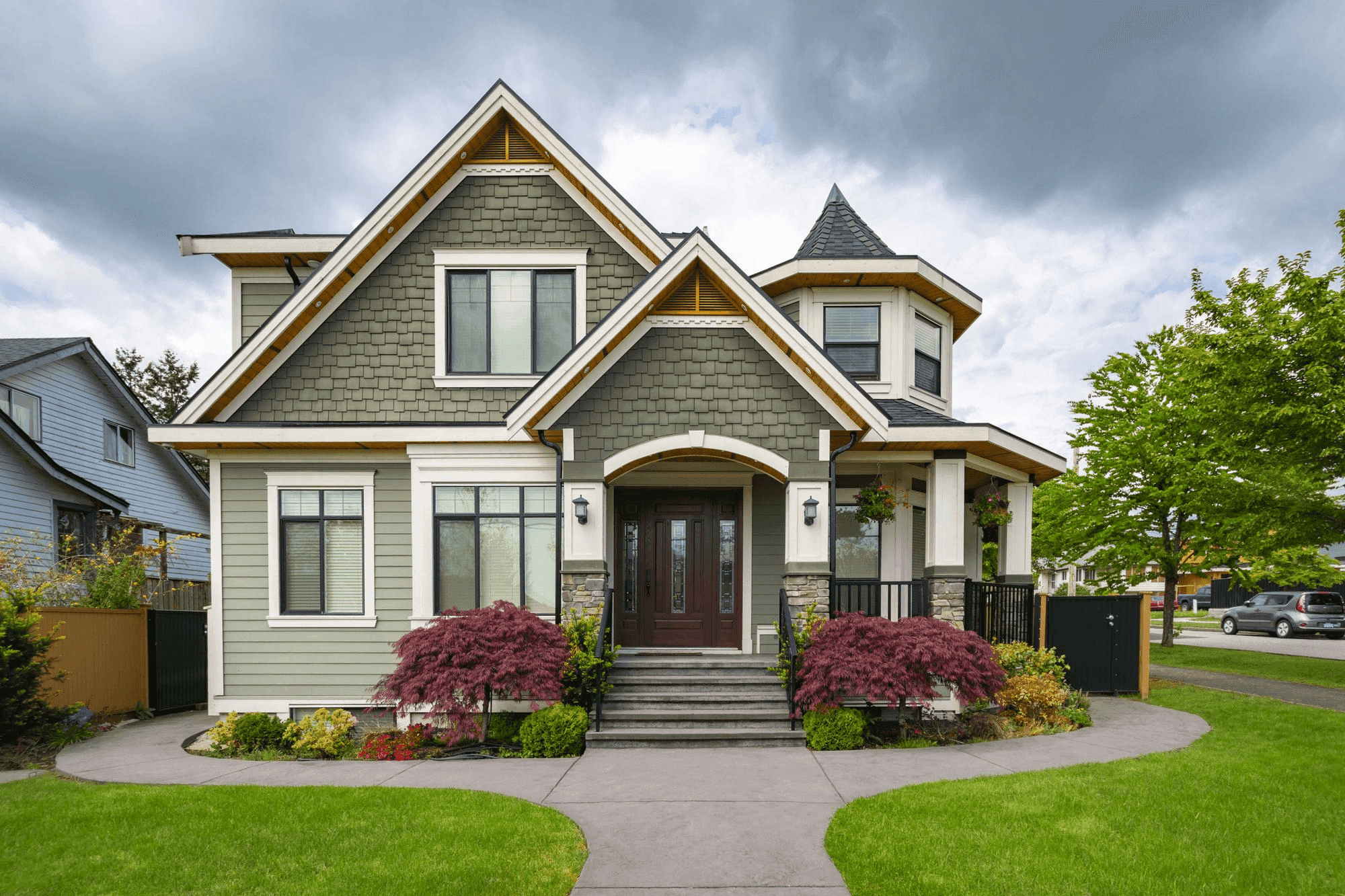
Whether for relocation or investment, Miami suburbs in 2026 present opportunities for families and investors seeking safety, education, space, and resilient housing values. These macro forces continue to strengthen demand across the best suburbs in Miami.
Ready for a deeper guide on purchasing a single-family home in this market?
Read How to Buy a Single-Family House in Miami for concrete steps and expert tips.
Best Suburbs in Miami: Housing Trends (2023-2025 Review + 2026 Outlook)
Recent Miami real estate trends show the suburban housing market shifting from a period of rapid migration to a recalibration phase focused on long-term value and end-user stability.
2023-2024: Migration Surge
During this period, the region experienced a significant influx of residents and capital:
- Population Growth: Miami-Dade County added over 64,000 new residents, a 2.3% increase.
- International Appeal: More than 54,000 international migrants arrived in 2023, sustaining strong housing demand despite rising interest rates.
- Tourism Impact: Greater Miami welcomed approximately 27.2 million visitors, who spent over $21 billion, boosting interest in short-term rentals and secondary homes.
2025: Market Recalibration
By 2025, the market cooled from its post-pandemic peak but remained stable:
- Price Moderation: Single-family home prices rose a modest 2%.
- Buyer Selectivity: Demand concentrated on “best-in-class” properties with thoughtful layouts and strong financial profiles, while older resales lagged.
- Interest Rate Adjustment: Mortgage rates averaged 6.4%, gradually declining toward 6.3%, easing the “locked-in” inventory effect.
2026 Outlook: Accelerated Rebound
Looking ahead, Miami real estate trends suggest the market is expected to rebound strongly:
- Price Growth: Single-family home prices are projected to increase 4%, double the rate of 2025.
- Sales Volume: Single-family home sales are forecasted to rise 5.6% as buyer confidence strengthens.
- Major Catalysts: Key projects-including Miami Freedom Park and corporate migrations like Citadel-are expected to drive demand.
- Inventory Trends: Buyers are shifting toward new construction to avoid rising insurance and maintenance costs associated with older properties.
This rebound reinforces why the best suburbs in Miami remain central to long-term buyers.
Key Growth Trends
Recent data confirms that the best suburbs in Miami continue to outperform in resale stability. Several of the safest suburbs in Miami, including Pinecrest and Coral Gables, continue to see strong resale activity driven by low crime rates - 66 - 74% below the national average-and access to top-rated schools. These factors make them highly desirable for families seeking stability and quality of life.
Affluent buyers are increasingly willing to pay a “safety premium” of $900-$1,100 per month to secure homes in ultra-safe communities such as Parkland and Weston, reflecting the high value placed on security and neighborhood quality.
Investors are shifting focus to emerging opportunities in areas like Little River, with adaptive reuse potential, and workforce housing markets like Hialeah, where recent zoning updates are creating new residential options and long-term growth prospects.
Buying a Home? Get up to 1.5% Cash Back at Closing
Get pre-approved first, then start exploring homes knowing you can receive up to 1.5% of the home price back at closing.

Best Suburbs Near Miami: Structured Profiles 2026
Miami’s suburban market in 2026 is defined by safety, family appeal, and quality of life. These six neighborhoods stand out for their distinctive lifestyles, community vibes, and amenities beyond just numbers.
1. Coral Gables
Known as “The City Beautiful,” Coral Gables offers Mediterranean charm, tree-lined streets, and walkable cultural hubs. Residents enjoy upscale dining, boutique shops along Miracle Mile, and close proximity to Downtown, making it ideal for families and professionals seeking both prestige and convenience.
Best For: Families and professionals seeking prestige, convenience, and a walkable urban-suburban blend.
2. Pinecrest
Pinecrest is prized for its spacious estates, lush parks, and yard-first suburban living. Its tranquil streets and large lots attract families looking for privacy, pools, and a slower pace while still being within reach of Miami’s core.
Best For: Families wanting space, outdoor amenities, and a peaceful suburban lifestyle.
3. Palmetto Bay
Dubbed the “Village of Parks,” Palmetto Bay emphasizes green spaces, outdoor activities, and a relaxed community vibe. Its Craftsman- and Mediterranean-style homes complement a family-friendly environment where residents enjoy a quieter suburban lifestyle.
Best For: Families seeking a low-key, family-friendly environment with access to parks and recreational activities.
4. Key Biscayne
This exclusive island suburb offers resort-style living with private beaches, golf-cart-friendly streets, and seclusion. Ideal for affluent families or those seeking coastal privacy, Key Biscayne combines natural beauty with a sense of exclusivity.
Best For: Affluent buyers and families looking for privacy, coastal living, and resort-style amenities.
5. Cooper City
Cooper City is recognized for strong community values and a family-focused environment. Its neighborhood-oriented atmosphere and well-maintained parks make it a reliable choice for those prioritizing a supportive and tight-knit community.
Best For: Families prioritizing community cohesion, safety, and a supportive suburban environment.
6. Bal Harbour
Bal Harbour blends luxury oceanfront living with proximity to high-end shopping. Its serene streets and safe environment appeal to buyers seeking a high-end lifestyle without the density of urban Miami.
Best For: Buyers seeking high-end, exclusive living with beach access and upscale lifestyle amenities.
Key Metrics at a Glance
Suburb | Niche Rank | Population | Schools | Commute (min) | Review Score |
|---|---|---|---|---|---|
| Coral Gables | 1 | 49,802 | A+ | 10-15 | 4.3 |
| Pinecrest | 2 | 18,462 | A+ | 20-30 | 4.0 |
| Palmetto Bay | 3 | 24,639 | A+ | 35 | 4.2 |
| Key Biscayne | 8 | 14,791 | A+ | 15-20 | 4.7 |
| Cooper City | 6 | 34,660 | A+ | 30-40 | 4.2 |
| Bal Harbour | 22 | 3,055 | A | 20 | 4.6 |
Each of these communities consistently ranks among the best suburbs in Miami for different buyer profiles.
you’re open to lifestyle and investment options beyond single-family homes, check out:
Explore Best Places to Buy Condos in Miami for top condo markets and insights.
Miami Neighborhood Trends in 2026
Edgewater, Wynwood, and Little River are leading the charge as Miami neighborhoods with strong investment potential, driven by luxury condo developments, cultural growth, and urban renewal.
Edgewater
This Biscayne Bayfront district is booming with high-rise condos, with median prices around $639 per square foot as of late 2025. Proximity to Downtown and major projects-like the 49-story tower near NE 24th Street-position Edgewater for rapid appreciation. Bay views and urban momentum continue to attract luxury buyers focused on data-driven investment.
Best For: Investors seeking waterfront condos and long-term bayfront appreciation.
Wynwood
Miami’s arts district has seen 124% population growth since 2015, with new residential units pushing prices to $850-$1,100 per square foot. Its cultural energy and ongoing buildout make it a lifestyle and investment hub beyond typical waterfront premiums.
Best For: Buyers prioritizing arts, culture, and neighborhood-driven upside.
Little River
Emerging as an arts and culinary hotspot, Little River mirrors Wynwood’s growth trajectory, benefiting from artist migration and nearby waterfront potential. Projected prices are rising from $425K to $525K, offering early investment appeal.
Best For: Risk-tolerant investors seeking high ROI from emerging arts districts.
Allapattah
A value-driven market with volatility, Allapattah is expected to see 20% price growth to a median of $590K due to Wynwood spillover and Brightline transit access. Industrial parcels are converting amid gentrification, creating opportunities at a discount to pricier neighboring areas.
Best For: Investors chasing momentum and opportunistic value plays.
Coconut Grove
Wellness-oriented projects and limited housing supply continue to boost demand in Coconut Grove. Residences like The Well enhance lifestyle appeal, while family-friendly vibes and proximity to Miami’s core support steady appreciation.
Best For: Buyers seeking established neighborhoods with long-term lifestyle and investment stability.
Miami Freedom Park Area
The Inter Miami stadium is transforming the surrounding district, driving retail, dining, and walkability surges. This entertainment-focused development promises broad economic uplift for adjacent properties.
Best For: Investors and residents betting on sports-fueled urban revitalization.
Neighborhood Growth Snapshot 2026
| Neighborhood | Projected Price Growth | Key Driver | Median Price (est. 2025) | Risk Level |
|---|---|---|---|---|
| Edgewater | Durable bayfront rise | Condo towers | $699K | Moderate |
| Wynwood | 89% past decade | Culture + density | $850-$1,100/SF | Moderate |
| Little River | +24% to $525K | Arts migration | $425K | High |
| Allapattah | +20% to $590K | Transit spillover | $490K | Moderate-High |
| Coconut Grove | High demand supply | Wellness projects | Varies | Low-Moderate |
| Freedom Park | Stadium ripple | Entertainment hub | Emerging | Moderate |
Understanding pricing differences across the best suburbs in Miami requires deeper analysis beyond medians.
Miami Suburbs Offering the Strongest Value in 2026
Buyers searching for affordable suburbs in Miami are increasingly comparing price per square foot rather than just headline medians. Pinecrest and Palmetto Bay rank among the Best Suburbs in Miami for value-driven buyers. They combine luxury, family-friendly amenities, and more accessible pricing. Coral Gables, Key Biscayne, Cooper City, and Bal Harbour have premium or niche advantages, but Pinecrest and Palmetto Bay stand out for space, top schools, and lifestyle benefits.
Value Metrics Overview
Rather than focusing on headline medians, value is measured by price per square foot, growth trends, and lifestyle benefits.
- Pinecrest: Mid-$600s/SF estates provide buyers with flexible land, privacy, and negotiation leverage as prices dip slightly.
- Palmetto Bay: With a 45% price appreciation since 2021 to $456/SF, it delivers green spaces, parks, and top-rated schools below coastal premiums.
- Coral Gables: High $600s/SF with modest declines, offering walkability, historic charm, and dining/cultural hubs rather than raw lot space.
Price and Growth Snapshot
Suburb | Median Price (est.) | Price/SF (2025-26) | YoY Change | Key Value Edge |
|---|---|---|---|---|
| Pinecrest | $1.9M-$2.07M | Mid $600s | Slight drop | Land, privacy, schools |
| Palmetto Bay | $800K-$1M | $456 | +45% (2021-25) | Appreciation, green space |
| Coral Gables | $1.4M-$1.45M | High $600s | Modest decline | Stability, dining |
| Key Biscayne | $1M+ | $700+ | Stable | Exclusivity, beaches |
| Cooper City | $600K-$800K | Mid $400s | Steady growth | Affordability, community |
| Bal Harbour | $1.2M+ | $900+ | Volatile up | Luxury shops, oceanfront |
Investment Takeaways
Not all of the best suburbs in Miami operate on the same pricing cycle.
- Pinecrest is ideal for long-term family buyers, prioritizing estate potential and lifestyle over quick flips. Slightly longer days on market can provide negotiation leverage.
- Palmetto Bay offers growth-oriented value, with spacious homes under $500/SF and room for appreciation in the near term.
- Across all suburbs, 2026 favors buyers who consider total ownership costs-insurance, property taxes, and maintenance-amid a 3.6% dip in Miami-Dade median values.
Best Suburbs in Miami 2026: Schools, Commute & Pricing Impact
Miami suburbs like Pinecrest and Coral Gables command premium home prices, driven by A+ rated public schools. In 2026, top school districts boost values 15-25% above average areas.
Schools & Pricing Trends in 2026
School performance remains one of the strongest value drivers across the best suburbs in Miami.
- Pinecrest and Coral Gables feature elite Miami-Dade schools like Pinecrest Elementary (91% proficiency) and Coral Reef, correlating to $1.5M+ medians-20% above metro norms.
- Palmetto Bay's Coral Reef Elementary (91% rating) drives $800K-$1M values with family demand, while Cooper City's A+ district supports steady $600K-$800K pricing.
- Key Biscayne's waterfront schools add exclusivity premiums, but weaker performers lag 10-15% in appreciation.
Schools & Education Snapshot 2026
Suburb | Top School Example (Rating) | Pricing Premium from Schools | Avg Commute (min) | Traffic Factor |
|---|---|---|---|---|
| Pinecrest | Pinecrest Elem (A+/91%) | +20-25% ($1.9M median) | 20-30 | Moderate (US-1) |
| Coral Gables | Coral Gables Prep (A+) | +15-20% ($1.4M median) | 10-15 | Low |
| Palmetto Bay | Coral Reef Elem (A/91%) | +10-15% ($900K median) | 35 | High (I-95) |
| Key Biscayne | Key Biscayne K-8 (A+) | +25% ($1M+ median) | 15-20 | Causeway delays |
| Cooper City | Embassy Creek (A+/88%) | +10% ($700K median) | 30-40 | High congestion |
| Bal Harbour | Ruth K. Broad (A) | +15% ($1.2M median) | 20 | Moderate |
Commute & Transportation in 2026
Commute efficiency continues to differentiate pricing across the Best Suburbs in Miami. Transportation often dictates where families settle:
- Proximity Advantage: Coral Gables offers shorter trips to Brickell and Downtown, with better transit options reducing commute unpredictability.
- Suburban Trade-off: Pinecrest and Palmetto Bay provide more space and privacy but come with longer peak-hour drives.
- Metrorail Benefit: For families in Kendall, the Metrorail offers a reliable link to Downtown, bypassing surface traffic.
- Brightline Effect: Properties near Brightline stations have seen resale values rise over 130% since 2018.
- Emerging Hubs: Neighborhoods like Edgewater, Midtown, and Wynwood offer walkability and cultural energy without core district congestion.
Commute & Transportation Snapshot 2026:
Suburb | Avg Drive (Rush Hour) | Primary Route | Public Transit Option | Congestion Level |
|---|---|---|---|---|
| Coral Gables | 10-15 min | US-1/SW 8th St | Metrorail (Dadeland) | Low |
| Pinecrest | 20-30 min | US-1 (Snapper Creek) | Limited bus | Moderate |
| Bal Harbour | 20 min | 95th St/Long Island Expwy | Bus to Tri-Rail | Moderate |
| Key Biscayne | 15-20 min | Rickenbacker Cswy | Bus/shuttle | Causeway peaks |
| Palmetto Bay | 30-40 min | FL-821/I-95 | South Dade BRT | High |
| Cooper City | 35-45 min | I-95/Sawgrass Expwy | Tri-Rail express | High |
Practical Strategy for Suburban Buyers
With single-family home prices projected to rise, buyers targeting the Best Suburbs in Miami must focus on daily functionality to increase by around 4% this year. The buyers who come out ahead focus on how a home works in everyday life-not just how it appears.
Here’s a practical framework to guide you through the current market:
1. Put Schools and Commutes to the Real-World Test
Don’t rely only on online rankings or overall grades.
- Confirm School Access: Some highly rated options, such as the School for Advanced Studies (SAS), only serve 11th and 12th grades and have selective admissions. Make sure the school truly fits your child’s age and eligibility.
- Drive the Route at Peak Hours: In Miami, traffic patterns can dramatically change your daily routine. Test your commute during real morning and afternoon rush hours before making a decision.
- Prioritize Transit Access: Communities like Kendall offer a quieter suburban feel while still connecting to Downtown via the Metrorail-an advantage for working parents who want a predictable commute.
2. Factor in the Hidden Monthly Costs
A lower list price doesn’t always mean a lower total expense.
- Insurance Considerations: Newer construction homes often comply with updated hurricane and flood standards, which can help reduce insurance premiums compared to older properties.
- Paying for Safety and Stability: In highly secure areas like Parkland, buyers may spend an additional $900-$1,100 per month in mortgage and taxes. However, that premium can translate into stronger long-term value and smoother resale potential.
- Check Flood and Elevation Details Early: Reviewing the elevation certificate and FEMA flood zone designation upfront allows for more accurate cost comparisons between properties.
3. Choose the Right Neighborhood Strategy
Select a community that aligns with your family’s lifestyle priorities:
- Convenience and Prestige: Coral Gables offers shorter commutes to employment hubs like Brickell and typically strong resale performance, though renovation rules may be stricter due to historic preservation guidelines.
- Space and Privacy: Pinecrest and Palmetto Bay are known for larger lots and yard-focused living, but commuting north can require more drive time.
- Modern and Relatively Affordable: Buyers targeting affordable suburbs in Miami often evaluate Doral and Aventura for newer gated communities and favorable safety ratings. and favorable safety ratings at more attainable price points.
4. Secure Financing and Move with Confidence
In competitive suburban markets, sellers value certainty as much as price.
- Consider Pre-Construction Opportunities: Buying early in a new development may provide pricing that’s 10-20% below completed inventory.
- Explore Closing Credits: Some services offer cash-back or commission credits (up to 1.5% in certain cases), helping preserve liquidity for insurance adjustments and tax changes after closing.
Final Thought:
The best suburbs in Miami reward clarity in 2026. The buyers who succeed aren’t chasing headlines - they’re making disciplined decisions around schools, safety, insurance exposure, commute logistics, and total ownership costs.
Suburbs like Pinecrest and Palmetto Bay stand out for land and long-term family appeal. Coral Gables and Key Biscayne command premiums for location and lifestyle. Emerging districts like Edgewater and Little River offer upside for investors willing to accept more volatility. Each path works - if it matches your time horizon and priorities.
With single-family home prices projected to rise about 4% this year and sales activity expected to increase, waiting for dramatic price drops is unlikely to be a winning strategy. Instead, focus on properties that function well day-to-day, sit in resilient school zones, and offer structural advantages that will matter at resale. The best places to live near Miami are no longer defined by proximity alone but by durability and long-term planning.
In this market, value isn’t just about price per square foot. It’s about durability - of the home, the neighborhood, and your long-term plan.
FAQs
1. Which Miami suburbs offer the best value in 2026?
In 2026, Pinecrest and Palmetto Bay stand out for long-term value. Pinecrest offers large lots, estate-style homes, and strong school-driven pricing resilience. Palmetto Bay delivers green space, family appeal, and lower price-per-square-foot entry points compared to coastal luxury markets. Buyers focused on space, schools, and resale stability tend to prioritize these two suburbs.
2. Are Miami suburban home prices expected to rise in 2026?
Yes. Single-family home prices are projected to increase around 4% in 2026, with sales volume forecasted to rise as well. After a modest 2% gain in 2025, the market is shifting back toward moderate growth. Well-located, newer homes in strong school zones are likely to outperform older properties that carry higher insurance and maintenance costs.
3. How much do schools impact home prices in Miami suburbs?
School quality can add a 15-25% pricing premium in top districts. Suburbs like Coral Gables, Pinecrest, and Key Biscayne command higher median prices largely due to A+ rated public schools. Buyers should verify zoning boundaries and admission criteria before purchasing, as access to top schools is one of the strongest long-term value drivers.
4. What hidden costs should buyers consider in Miami suburbs?
Beyond the purchase price, buyers should evaluate:
- Homeowners insurance (especially for older homes)
- Flood zone designation and elevation certificates
- Property taxes and HOA fees
- Commute-related fuel and time costs
New construction built to updated hurricane codes can help reduce insurance premiums. In highly secure areas, some buyers pay an additional $900-$1,100 per month for location advantages, but that premium often supports stronger resale stability.
5. Are Miami suburbs better for families or investors in 2026?
They can serve both, depending on the strategy.
Family-focused buyers often choose Pinecrest, Palmetto Bay, or Cooper City for safety, schools, and community feel. Investors may look toward emerging neighborhoods like Little River or transit-connected districts benefiting from projects such as Miami Freedom Park.
The key difference is time horizon: families typically prioritize durability and daily function, while investors focus on appreciation potential and redevelopment momentum.
Get the latest market trends, homebuying tips, and insider updates—straight to your inbox. No fluff, just the good stuff.
Article by
As a great communicator with excellent negotiation skills, I focus more on establishing unbreakable ties between my clients, as opposed to just helping them achieve their real estate dreams. As a representative of both buyers and sellers, I understand how to lead a transaction process to ensure that the needs of both are met. My track record speaks for itself. Since I ventured into the industry in 2013 as a realtor, I have not only helped many buyers land perfect homes, but I have also assisted tons of owners and investors build wealth.