Buying a Home in Winter Garden, FL: A 2026 Mortgage Guide
July 29, 2026
10 Minutes
Drive from Plant Street to the newest phase of Horizon West and you'll pass through two different housing markets in about fifteen minutes. One is a walkable, century-old downtown lined with homes built before most zip codes existed. The other is still being poured out of concrete trucks, organized into "villages" with names like Hamlin and Waterleigh, each governed by its own homeowners association and, in most cases, its own special taxing district. Both are in the Winter Garden. Buyers who treat them as one market, with one price and one set of costs, tend to get surprised at the closing table.
This guide walks through what it actually costs to buy in Winter Garden in 2026 - not just the purchase price, but the mortgage financing details, assistance programs, insurance quirks, and monthly obligations that come with each part of the market. The goal isn't to sell you on the city. It's to help you understand it well enough to make a good decision, whichever end of it you're buying into.
Market Snapshot: What Winter Garden Actually Looks Like Right Now
Winter Garden is a fast-growing suburb about 14 miles west of downtown Orlando, and its housing market splits along the same line as its geography: an established, walkable core near downtown, and a still-expanding new-construction corridor to the south in Horizon West. The city has grown considerably since the 2020 Census counted just under 47,000 residents - current estimates put the 2026 population somewhere between 48,000 and 49,400, depending on which projection you use. That's a normal range of variance between data providers measuring different points in time, not a sign of disagreement about the underlying trend, which is clearly upward. Median household income here is $106,495, well above both Orange County's $79,719 and the statewide figure. That income gap matters for mortgage financing conversations: it's a large part of why this market supports higher price points and more new construction than the county overall.
The pricing picture is where things get genuinely confusing if you don't know what to look for. Search "Winter Garden median home price" and you'll find figures ranging from about $542,000 to $730,000, depending on the source and the month - an unusually wide spread for one city. Three things explain it. First, geography: "Winter Garden" can mean the incorporated city limits, the broader 34787 zip code, or a wider MLS reporting area, and those boundaries capture different housing stock. Second, methodology: a median sale price and an automated valuation estimate measure different things entirely. Third, sample size: in a city this size, a handful of luxury closings in a given month can swing a monthly median substantially. The most locally grounded figure available - a weekly snapshot pulled directly from the regional MLS - puts the median in the $625,000-$626,000 range as of late spring 2026. Treat any single number you see online as a starting point to verify against current MLS data, not a fact to plan your budget around.
Where the market's actual volume sits matters more than any single median. The $501,000-$700,000 range is the busiest segment by a wide margin, covering most new construction coming out of Horizon West along with a large share of resale inventory citywide. The $300,000-$500,000 tier still exists, but it's increasingly limited to townhomes and older homes near downtown - genuine new-construction single-family homes under $500,000 are becoming hard to find. Above $700,000, you're looking at larger new-construction estates and established luxury or lakefront product, much of it concentrated in the neighboring Oakland Park area. The three sections below walk through each of these price bands in turn, since the loan products, assistance programs, and underwriting issues that matter shift meaningfully from one to the next.
One application. 100+ lenders.
reAlpha Mortgage shops a network of lenders to find the right loan for your situation-no rate-shopping required.
Buying in the $300,000-$500,000 Range
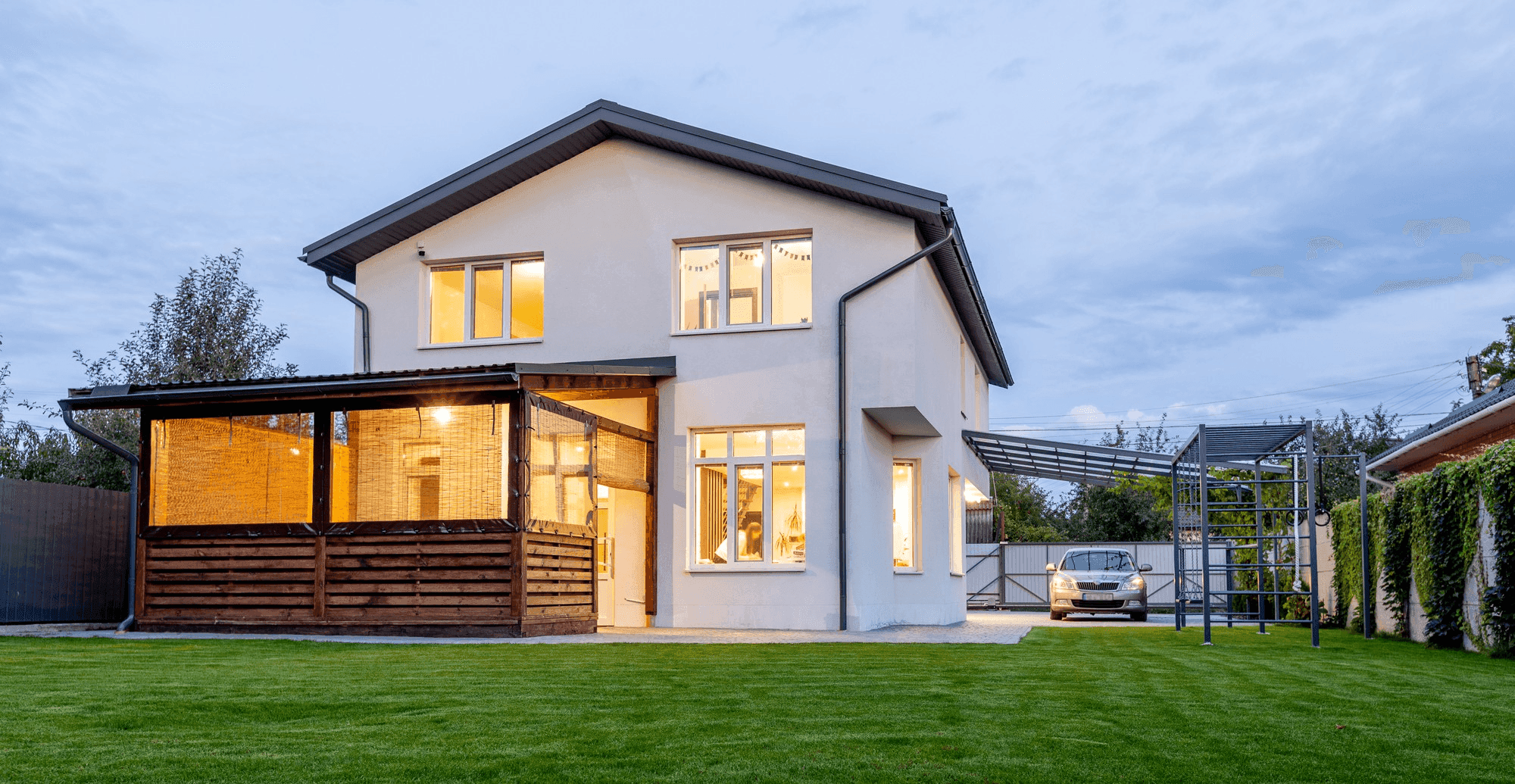
This is the entry point into Winter Garden, and what "entry point" means depends on where you're shopping. In Horizon West, it means townhomes - communities like Waterleigh start base pricing around $434,990. Closer to downtown and in East Winter Garden, it means older homes, often 1,000 to 1,800 square feet, built before 1990. Genuine new-construction single-family homes at this price point are scarce and getting scarcer.
Who tends to buy here: first-time buyers, young professionals, downsizers, and buyers who'd rather have a shorter commute to downtown than an extra bedroom. In Horizon West specifically, it's often young families and dual-income couples looking for new construction at the most accessible price point the area offers.
This tier is also the one place in Winter Garden where FHA mortgage financing fits cleanly. Because most homes here fall comfortably under Orange County's FHA loan limit of $541,287, FHA's 3.5% down payment option works without complication. Conventional mortgage financing with 3-5% down is common too, especially for new-construction townhomes, where builders frequently offer their own lender incentives. It's worth comparing those builder offers against an independent lender quote before assuming the in-house deal is the best one available.
This is also where down payment assistance does the most good relative to loan size. Both the Orange County DPA program and Florida's Hometown Heroes program are aimed squarely at purchases in this range - full eligibility details are in the Down Payment Assistance section below.
One thing to watch for if you're buying an older home near downtown: insurance underwriting gets stricter as roofs age. Homes with roofs older than 15 to 20 years can face four-point inspections, higher premiums, or in some cases coverage refusal, with reported premiums running $4,500 to $7,000 a year or more on a $500,000 replacement value. That's a real budgeting number, not a worst-case scenario. New-construction townhomes, by contrast, typically qualify for wind-mitigation credits thanks to concrete block construction, which helps offset some of Florida's generally high insurance costs.
Before making an offer in this tier: if you're looking at a townhome, get the current HOA fee in writing - it affects your qualifying debt-to-income ratio even without a special district assessment attached. If you're looking at an older home, get an insurance quote before you're under contract, not after. A roof that looks fine can still be expensive to insure.
Scenario: a first-time buyer couple purchasing a $460,000 townhome in Waterleigh with FHA mortgage financing and Orange County DPA assistance would be working within the tier this combination is built for - FHA covers the loan comfortably under the county limit, and DPA can meaningfully reduce the cash needed at closing, assuming they qualify on income and complete the required homebuyer education first.
Buying in the $501,000-$700,000 Range
This is Winter Garden's center of gravity - the price range where most of the actual buying and selling happens, covering the bulk of production and semi-custom new construction across Horizon West (Hamlin, Summerlake, and the Ovation-area communities among them) along with a substantial share of resale inventory throughout the rest of the city.
Buyers here are usually families moving up or relocating professionals drawn by Orange County Public Schools zoning - Water Spring, Panther Lake, and Horizon High serve Horizon West, while West Orange High covers the area closer to downtown. Many are also comparing Winter Garden to pricier, more built-out parts of Orlando and finding they can get more square footage for the money here.
Conventional mortgage financing is the default in this tier, since most purchases exceed the FHA limit and fall outside FHA's practical reach. That's not a problem for most buyers, though: Orange County's conforming loan limit is $832,750, high enough that this entire tier stays comfortably within conventional financing without triggering jumbo underwriting. VA mortgage loans work cleanly here too, for the same reason - eligible veterans can use zero-down VA financing across this whole price range without running into the loan limit.
Now for the part that catches people off guard. Nearly every new-construction community in Horizon West carries a Community Development District, or CDD - a bond-funded special taxing district that pays for the roads, utilities, and amenities built alongside the homes. It shows up as a non-ad valorem assessment on the property tax bill, separate from and in addition to the HOA fee, and it isn't optional. Individual HOA fees in these communities typically run $150 to $350 a month; add the CDD assessment, and the combined monthly cost commonly lands somewhere between $400 and $700. In one documented example, a $550,000 Horizon West home carrying a $250-a-month HOA fee and roughly $2,000 a year in CDD assessments had an all-in monthly payment - principal, interest, taxes, insurance, HOA, and CDD combined - of around $4,200 to $4,500. That's the number that surprises buyers who budgeted from the base price and the advertised principal-and-interest payment alone, without adding in everything layered on top of it.
Here's the practical implication most buyers miss: builder marketing materials describe the HOA and CDD as amenities - a clubhouse, a pool, a lazy river - without always making clear that the number attached to them is a permanent, non-negotiable part of your monthly housing cost for the next 15 to 30 years. Ask for the specific lot's current CDD assessment and HOA dues from the county tax roll, not from the sales office, before you get too far into the process.
On the insurance side, new construction in this tier generally benefits from concrete block construction and modern roofing, which helps with wind-mitigation credits. But there's a newer wrinkle worth knowing about: as of January 1, 2026, homes insured through Citizens Property Insurance with wind coverage and a dwelling value (Coverage A) of $400,000 or more are required to carry flood insurance, regardless of flood zone. A lot of new construction in this price range crosses that $400,000 threshold, which means flood insurance may be mandatory even for a home that FEMA doesn't classify as high-risk. That requirement expands to every Citizens policy by January 1, 2027 - worth keeping in mind even if your current insurer isn't Citizens, since availability in the private market can shift.
Scenario: a relocating family purchasing a $625,000 new-construction home in the Hamlin area with conventional mortgage financing would sit squarely in this tier's typical profile. Before finalizing the purchase, they'd want a full HOA and CDD disclosure for the specific lot - not a community average - so their lender can calculate an accurate debt-to-income ratio and they know their real monthly number going in.
Buying Above $700,000
At this level, you're generally looking at larger new-construction estates - builders like David Weekley, Toll Brothers, and Taylor Morrison have product in this range in the premium sections of Horizon West - along with luxury and lakefront resale, concentrated mostly in the neighboring Oakland Park area.
Buyers here tend to be established move-up buyers, relocating executives, physicians, and business owners. Some pay cash or put down a substantial down payment, though there's no reliable local data on exactly what share does, so treat that as a general pattern rather than a statistic.
Mortgage financing gets more interesting here than the price tag alone suggests. Because Orange County's conforming loan limit is $832,750 - well above the national baseline in many other markets - a meaningful share of this tier can still be financed conventionally, especially with a reasonable down payment. Jumbo mortgage financing becomes necessary once the loan amount itself, not just the purchase price, crosses that $832,750 threshold. That distinction is worth understanding before you assume jumbo is automatic: a $750,000 purchase with 20% down has a loan amount well under the conforming limit and doesn't require jumbo underwriting at all. Only once your actual borrowed amount exceeds the ceiling do jumbo rules - stronger reserves, higher credit score expectations, larger down payments - come into play.
Down payment assistance doesn't reach this tier. Both DPA programs available in the area are built around lower and moderate incomes and purchase prices, and buyers here fall outside that eligibility by design.
The Citizens flood insurance mandate described above matters even more at this price point, since higher-value homes almost always carry a Coverage A above the $400,000 trigger. If you're planning to insure through Citizens, budget for flood coverage regardless of your flood zone designation. One more practical note for buyers in newly opened luxury phases: with fewer comparable sales available during initial build-out, appraisals can be harder to support - worth discussing with your lender early rather than after you're under contract.
Scenario: a buyer purchasing an $850,000 estate in Oakland Park with jumbo mortgage financing would want to run the numbers on down payment size before assuming jumbo underwriting is required at all. Depending on the loan amount after down payment, conventional financing may still be available, which typically means an easier qualifying process than jumbo guidelines require.
Mortgage Programs That Fit This Market
No single mortgage loan product dominates Winter Garden the way FHA might in a lower-priced market or jumbo might in a strictly luxury one - which product fits depends heavily on where in the price range you're shopping, as the sections above illustrate.
| Loan Type | Typical Down Payment | Where It Fits Best in Winter Garden | Local Consideration |
|---|---|---|---|
| Conventional | 3-20%+ | Dominant across all three tiers, especially $501K-$700K and the lower half of $701K+ | Builder-preferred lenders often offer rate buydowns or closing cost credits - compare against independent quotes |
| FHA | 3.5% | Best fit in the $300K-$500K tier | Loan limit of $541,287 means it rarely reaches Horizon West single-family new construction |
| VA | 0% for eligible veterans | Works across nearly the full price spectrum | The county's $832,750 conforming limit rarely restricts VA zero-down eligibility here |
| USDA | 0% where eligible | Generally not applicable | Winter Garden is an incorporated, suburbanized city and doesn't typically qualify as a USDA rural area |
| Jumbo | 10-20%+ | Primarily the upper $701K+ tier | Needed less often here than in many luxury markets, thanks to the relatively high conforming limit |
The one that surprises people is USDA. It's a zero-down option many buyers ask about, but Winter Garden's incorporated, suburban footprint generally doesn't meet USDA's rural-area eligibility criteria. If you're set on exploring it, eligibility would come down to a specific address checked against USDA's mapping tool - it's not a program to plan around here.
Get Pre-Qualified and Save Up to 1.5% at Closing with reAlpha
Save up to 1.5% at closing when you combine real estate and mortgage services with reAlpha.
Down Payment Assistance
Two programs are worth knowing about if you're buying in the lower end of this market, and both connect directly back to the price-tier guidance above.
Florida Hometown Heroes is a state program for full-time workers in eligible occupations - healthcare, K-12 education, first responders, law enforcement, childcare, and active military or veterans, among more than 50 qualifying fields. It requires first-time homebuyer status (no ownership in the past three years) and Florida-based employment. The assistance comes as 5% of your first mortgage loan amount, capped at $35,000 with a $10,000 minimum, structured as a zero-interest deferred second mortgage - meaning no monthly payments on it, but it comes due when you sell, refinance, or stop using the home as your primary residence. The program relaunched in July 2026 with $50 million in funding, and it's historically been claimed on a first-come, first-served basis before the fiscal year ends, so timing matters if you think you qualify.
Orange County's Down Payment Assistance Program, administered by the county's Housing and Community Development Division, offers up to $70,000 for very-low-income households, $40,000 for low-income, or $10,000 for moderate-income buyers, based on 2026 income limits tied to the county's area median income. It requires first-time homebuyer status and completion of HUD-approved homebuyer education, and it covers single-family homes, townhomes, condos, and modular homes - not mobile homes.
Here's the honest caveat, and it matters more in Winter Garden than it would in a lower-priced part of the county: both programs have purchase-price limits that weren't confirmed at a Winter Garden-specific level as of this writing. Since Winter Garden's typical pricing already runs above the county-wide median, homes in the $501K-$700K tier - the market's most active segment - could plausibly exceed a given program's purchase-price cap. Don't assume DPA applies just because you qualify on income. Confirm the current purchase-price limit directly with Orange County Housing and Community Development or a participating lender before factoring either program into your mortgage budget.
One more program worth mentioning only so it doesn't get confused with the two above: Winter Garden's Legacy Fund Home Rehabilitation Program offers up to $50,000 as a forgivable grant for home repairs. It's a real program, but it's for existing homeowners in the Historic East Winter Garden neighborhood fixing up homes they already own - not assistance for buying one. If you're a prospective buyer, this program doesn't apply to you.
Insurance & Underwriting Considerations
Insurance in Winter Garden splits into two fairly distinct stories, and which one applies to you depends on what you're buying - a direct extension of the two-market split described in the market snapshot above.
If you're looking at an older home near downtown or in East Winter Garden, roof age is the main underwriting issue. Roofs past the 15-to-20-year mark can trigger four-point inspections, premium increases, or coverage denials, and reported costs on these homes run $4,500 to $7,000 a year or more. Get a quote before you're locked into a mortgage contract - it can change your monthly budget significantly, and it's much easier to negotiate repairs or price with that information in hand than to discover it after closing.
If you're looking at new construction in Horizon West, the story is different. Concrete block construction is standard across the builders working in the area, which generally qualifies for wind-mitigation insurance credits and helps offset some of the cost pressure that makes Florida insurance expensive statewide.
The other thing every buyer in this market should know about is the 2026 Citizens Property Insurance flood mandate, introduced in the previous section. If you're insured through Citizens with wind coverage and your home's Coverage A - the dwelling replacement value - is $400,000 or higher, flood insurance is required as of January 1, 2026, regardless of your FEMA flood zone. That threshold expands to every Citizens policy by January 1, 2027. Since a large share of Winter Garden's dominant price tier crosses that $400,000 mark, this isn't a niche concern - it affects a meaningful share of buyers here, particularly in the $501K-$700K and $701K+ ranges.
One more note, because it's easy to find bad information online: some flood-insurance content about Winter Garden actually describes flood zones near Lake Eola and the Butler Chain of Lakes - those are Downtown Orlando features, not Winter Garden ones, which sits closer to Lake Apopka. If you come across flood-zone information for this area, verify it against FEMA's Flood Map Service Center for your specific address rather than trusting a generic regional article.
If you're wondering about Florida's SB 4-D condo inspection law - the one requiring milestone inspections and reserve studies for older condo buildings - it's mostly not a Winter Garden issue. The city's attached housing stock is overwhelmingly low-rise townhomes rather than the three-or-more-story buildings the law covers. It's a much bigger deal in Downtown Orlando or coastal Florida. Still worth checking building-by-building if you're considering a condo, but it shouldn't be your top concern here the way it might be elsewhere in the county.
Property Taxes & Closing Costs
Winter Garden's city millage rate increased from 4.5 to 4.8565 mills for fiscal year 2026, a change the city commission approved to address a budget shortfall and build toward a larger reserve fund. In practical terms, that adds roughly $53 a year in city tax for every $200,000 of your home's taxable value - not a large number on its own, but it layers on top of Orange County's general millage, the school district's millage, and, if you're buying new construction in Horizon West, the CDD assessment discussed earlier. The combined total for any specific property is worth running through the Orange County Property Appraiser's tax estimator before you make an offer, since it varies parcel by parcel.
If you'll be living in the home as your primary residence, Florida's homestead exemption - up to roughly $50,000 to $51,411 for 2026 - applies here the same way it does across the state, and it's worth filing for by the March 1 deadline the year after you close.
Closing costs generally follow the same pattern as the rest of Florida: buyers typically pay somewhere in the 2-5% of purchase price range, while sellers cover more, often 8-9.5% of the sale price, following local custom. Given Winter Garden's higher typical purchase prices, those percentages translate to real dollars - worth budgeting for well before mortgage closing day rather than treating as an afterthought.
Condo & HOA Considerations
HOA membership is close to universal in new-construction Horizon West and common in most Winter Garden neighborhoods built since the 1990s. Individual community HOA fees run $150 to $350 a month, and some Horizon West communities layer a village-level HOA fee on top of a broader master community fee, so the number on a listing sheet isn't always the full picture.
As covered in the $501K-$700K section, the CDD assessment is the bigger financial story here - a separate, bond-funded obligation attached to most Horizon West new construction, distinct from both the HOA fee and from condo-specific special assessments under SB 4-D. It's worth keeping these two things straight: an HOA fee pays for ongoing community upkeep and amenities, while a CDD assessment repays the bonds that built the roads and infrastructure in the first place, and it doesn't go away for 15 to 30 years regardless of how the community matures.
Because true condo products - the kind covered by SB 4-D's structural reserve and milestone inspection requirements - are limited in Winter Garden, that law affects relatively few local transactions. If you are looking at a qualifying condo building, though, it's still worth confirming its inspection and reserve-funding status directly rather than assuming the rules don't apply just because condos are uncommon here overall.
Before signing a contract on anything with an HOA or CDD attached, request a current estoppel letter or CDD statement for the specific property. Builder marketing materials and even early sales disclosures sometimes understate the long-term cost, and the only reliable number is the one tied to your actual lot.
Common Buyer Mistakes
A few patterns show up often enough in this market to call out directly.
The most common one is budgeting for mortgage principal, interest, taxes, and insurance while forgetting the CDD assessment entirely - easy to do when it isn't clearly broken out in early builder pricing. Related to that: assuming county-wide down payment assistance figures apply automatically to a Winter Garden purchase, without checking whether the home's price falls under the program's purchase-price cap.
Another is trusting a single online median-price figure without asking what geography or methodology produced it. As covered earlier, that number can range by nearly $200,000 depending on the source - enough to shift a buyer's whole sense of what's realistic.
Last, don't assume a home sitting outside a mapped high-risk flood zone is automatically exempt from flood insurance. Under Citizens' 2026 rule, a high enough Coverage A value triggers the requirement regardless of flood zone.
FAQs
Is Winter Garden part of Orange County, or does it have its own tax rules?
Winter Garden is an incorporated city within Orange County. You'll pay a combined millage that includes the city's own rate (4.8565 mills for FY2026) on top of the county's general millage, the school district's millage, and any CDD assessment that applies to your specific property.
What's the FHA loan limit for a home here?
$541,287 for a single-unit property, set at the county level - Winter Garden doesn't have its own separate FHA limit.
Does Winter Garden have its own down payment assistance program?
No dedicated purchase-assistance program was found at the city level. The Legacy Fund program is a repair grant for existing homeowners, not purchase assistance. Winter Garden buyers can still use the county-level DPA program and the state's Hometown Heroes program, subject to the purchase-price caveats discussed above.
What exactly is a CDD, and will I have to pay for one?
A Community Development District is a special taxing district that issues bonds to fund infrastructure like roads and utilities in a new master-planned community, repaid through an annual assessment on the property tax bill. Most Horizon West new construction in the Winter Garden area carries one, typically $1,500 to $4,500 a year, on top of the HOA fee. It's not optional, and it doesn't go away for 15 to 30 years.
Will I need flood insurance to buy here?
It depends on your specific property and insurer. If you're covered through Citizens Property Insurance with wind coverage and your dwelling value is $400,000 or more, flood insurance is mandatory as of January 1, 2026, regardless of flood zone - a threshold a lot of Winter Garden's dominant price tier crosses. Verify your specific address through FEMA's Flood Map Service Center rather than relying on general online descriptions of the area's flood zones.
Can I use a VA mortgage loan without a down payment on a $650,000 home here?
Generally, yes. Orange County's 2026 conforming loan limit is $832,750, which puts a $650,000 purchase well within standard VA zero-down eligibility from a loan-limit standpoint, subject to your individual entitlement and lender approval.
Conclusion: Next Steps
Winter Garden isn't a hard market to buy in, but it is one where the sticker price tells you less than it would somewhere with simpler cost structures. Before you get too far into a purchase, three things are worth doing regardless of which price tier you're shopping in.
First, if you're looking at anything in Horizon West, get a full CDD and HOA disclosure for the specific lot - not a community average - before you remove any contingencies. Second, get a homeowners insurance quote before you're locked into a contract, especially if you're buying an older home near downtown or anything that might require flood coverage under the Citizens threshold. Third, if you're planning to use a down payment assistance program, confirm its current purchase-price limit and your income eligibility directly with the program administrator rather than assuming a county-wide figure applies to your specific purchase.
Beyond that, talking with a licensed mortgage professional early - before you're shopping seriously - will give you a clearer sense of which mortgage loan product actually fits your price range and how the local costs discussed here translate into your specific monthly payment. Getting pre-approved for a mortgage with accurate numbers, including CDD and insurance costs, is a better foundation for house-hunting than working from an estimate that leaves those out.
Get the latest market trends, homebuying tips, and insider updates—straight to your inbox. No fluff, just the good stuff.
Article by
Rocky Billore is a mortgage industry leader and Chief Sales Officer with over two decades of experience across residential and commercial lending. Since entering the industry in 2004, he has been directly involved in funding more than $1.4 billion in loans. A recognized expert in VA and government lending, Rocky combines deep program knowledge with a data driven, relationship-first leadership style. His work focuses on building scalable sales organizations, developing high performing teams, and aligning technology with real world lending outcomes to improve the homeownership experience.