Forbearance vs. Foreclosure: Smart Choices for Homeowners Facing Financial Hardship
August 11, 2026
7 minutes
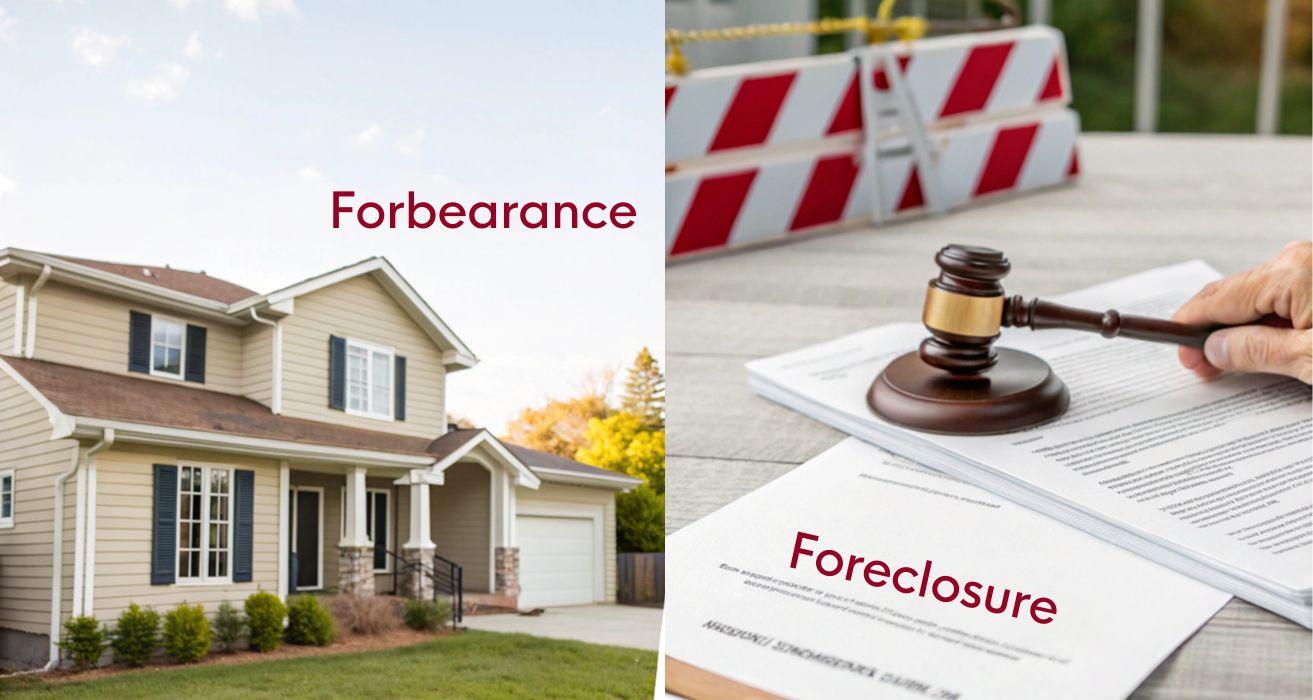
Financial hardship happens, and it can feel overwhelming when mortgage payments start stacking up. If you’re here, you’re likely facing tough decisions about your home. Don’t panic, we’ve got you.
Many homeowners think foreclosure is the only option when they fall behind. Not true. You might have a better path: forbearance.
This article breaks down the critical differences between forbearance and foreclosure, what they mean, how they work, and which one might give you the breathing room you need.
Key Takeaways:
- Forbearance offers temporary relief; foreclosure is permanent.
- Homeowners can avoid foreclosure by proactively communicating with lenders.
- Knowing your rights and mortgage options helps reduce long-term damage.
- Forbearance doesn’t erase payments, it defers them.
- Resources are available to help protect your credit and homeownership.
What is Forbearance?
Forbearance is a temporary pause or reduction in your mortgage payments, typically granted during periods of financial hardship. It’s not loan forgiveness, it’s more like a timeout.
Key Features:
- Available by request with lender approval.
- Typically lasts 3–6 months, sometimes up to 12.
- Missed payments are added to the end of your loan term or repaid in installments.
Pro Tip: You must request forbearance before missing payments. Waiting too long can limit your options.
One application. 100+ lenders.
reAlpha Mortgage shops a network of lenders to find the right loan for your situation-no rate-shopping required.

What is Foreclosure?
Foreclosure is the legal process lenders use to repossess your home when you default on your loan.
Key Features:
- Begins after 90+ days of missed payments (varies by state).
- You may be evicted, and the property is sold to recover the loan balance.
- Severely damages your credit for up to 7 years.
Heads Up: Foreclosure doesn’t just hurt your credit; it can derail future borrowing power, rental eligibility, and more.
Comparing Forbearance and Foreclosure
| Feature | Forbearance | Foreclosure |
|---|---|---|
Timeframe | Temporary | Permanent |
Credit Impact | Minimal (if proactive) | Severe |
Homeownership | Retained | Lost |
Legal Action | No | Yes |
| Payment Flexibility | Yes | No |
Which Option is Right for You?
If you’ve lost your job, faced medical bills, or had another temporary setback, forbearance could be a smart first step. But it’s not automatic, you’ll need to:
- Contact your mortgage servicer early.
- Document your hardship.
- Understand the repayment plan.
Foreclosure may be unavoidable in long-term default situations, but even then, other options like loan modifications, short sales, or deed-in-lieu may be available.
Important Disclosures
- This content is for educational purposes only and does not constitute legal or financial advice.
- All mortgage programs and relief options are subject to change and eligibility requirements.
- reAlpha Mortgage is a licensed mortgage lender (NMLS #1743790).
Get Pre-Qualified and Save Up to 1.5% at Closing with reAlpha
Save up to 1.5% at closing when you combine real estate and mortgage services with reAlpha.
Conclusion: Act Early, Choose Wisely
Buying a home is a big decision - and having the right information puts you ahead. But the real advantage comes from pairing smart research with a smarter way to buy.
When you use a reAlpha real estate company, you can be eligible to receive up to 1% of the home purchase price back as a credit at closing. Add reAlpha Mortgage, and that Cashback can increase to up to 1.5% back, helping offset closing costs and keep more money in your pocket when it matters most.
The Cashback is simple, transparent, and applied directly at closing - no complicated hoops, no delayed payouts. Just real savings tied to using a fully integrated homebuying experience.
See how much you could save:
- Check your eligibility
- Explore homes that fit your budget today.
- Your next move could come with thousands back at closing.
Estimate your savings → Rebate Calculator
Start your journey at reAlpha Mortgage.
FAQs
Does forbearance hurt my credit?
If you enter forbearance before missing payments and follow the plan, it typically has little or no credit impact.
Can I refinance after forbearance?
Yes, but many lenders require a period of on-time payments post-forbearance before approving refinancing.
How do I qualify for forbearance?
Most lenders require proof of temporary hardship. Contact your servicer to begin the process.
What happens if I miss the forbearance deadline?
Late action may limit your options. You could face foreclosure proceedings or fewer relief options.
Can foreclosure be reversed?
In some cases, yes, through a process called reinstatement or a loan modification. But once completed, foreclosure is final.
Need help deciding what’s best for you? Visit reAlpha Mortgage. or explore the buyer-friendly tools at reAlpha - and take your next step with confidence.
Get the latest market trends, homebuying tips, and insider updates—straight to your inbox. No fluff, just the good stuff.
Article by
Jamie is a mortgage industry executive and CEO of the Mortgage Division at ReAlpha Tech Corp (NASDAQ: AIRE), with more than 25 years of experience across operations, sales, compliance, and senior leadership. A sustained top-producing Loan Originator with multiple years of $100M+ in personal production, Jamie pairs strategic vision with deep operational fluency. Based in Southern California, Jamie serves on the Advisory Boards of 20/20 Vision for Success and the Broker Action Coalition and speaks widely on mortgage leadership, sales strategy, and industry transformation.
Related Topics
October 10, 2026
October 8, 2026
October 8, 2026
October 6, 2026
September 30, 2026
September 30, 2026