September 30, 2026
12 minutes
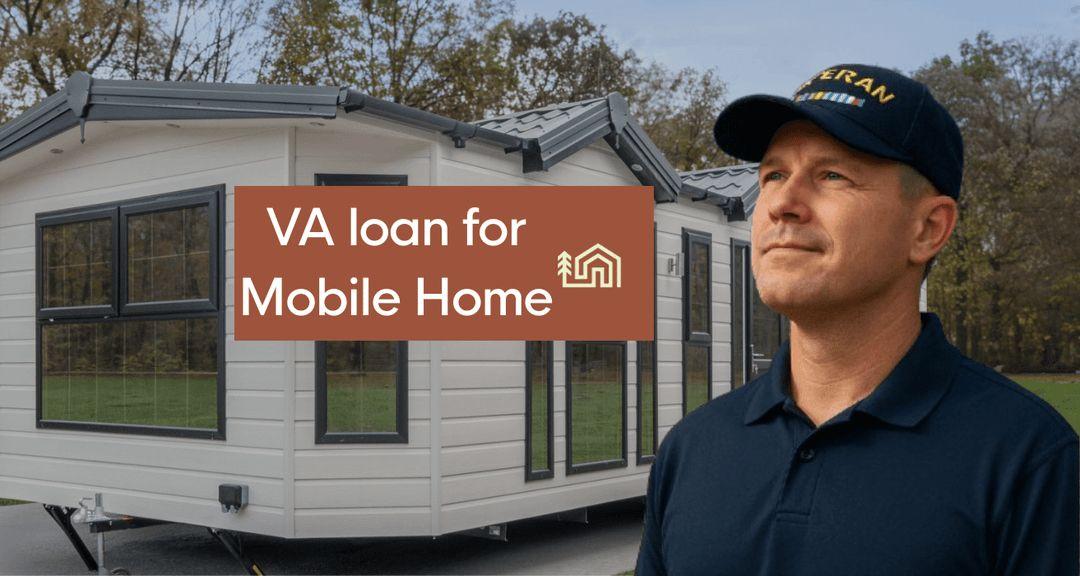
VA loans can finance manufactured homes. But whether yours qualifies comes down to three things: when the home was built, how it's attached to the land, and how it's titled. Most properties people casually call "mobile homes" don't meet all three. If you're wondering whether you can buy a mobile home with a VA loan, the short answer is: sometimes - and the requirements are specific enough that knowing them before you make an offer can save weeks of wasted effort.
This guide walks through exactly how VA loans for mobile homes work, what separates an eligible manufactured home from an ineligible one, and how to avoid the most common reasons these transactions fall apart. Whether you've searched VA loan mobile home, VA mobile home loan, or "VA home loan mobile home, the underlying rules are the same - and they're worth understanding in full before you start touring properties.
Mobile home vs. manufactured home - why the distinction matters for VA loans
The terms mobile home and manufactured home are used interchangeably in everyday conversation. The VA treats them as legally distinct categories, and the difference determines whether your VA loan for a mobile home can move forward at all.
The dividing line is June 15, 1976. That's the date the U.S. Department of Housing and Urban Development (HUD) introduced its Manufactured Home Construction and Safety Standards - a federal code that changed how factory-built homes were designed, inspected, and certified.
Any home built before June 15, 1976 is categorically ineligible for VA financing. The condition of the home doesn't change this. The age of the structure is the disqualifier - no exceptions.
Homes built on or after June 15, 1976 are classified as manufactured homes and can qualify for a VA home loan for a mobile home, provided they meet additional requirements covered in the next section. These homes carry a red HUD certification label - one per transportable section - that confirms they were built to the federal standard.
When you're evaluating a property, the first question is simple: what's the construction date? If the answer is before June 15, 1976, stop there. If it's after, move to the checklist below.
A note on terminology: within this article, "mobile home" refers specifically to pre-1976 structures that are ineligible for VA financing. "Manufactured home" refers to post-1976 HUD-compliant homes that may qualify for VA loans for mobile homes. This distinction matters when you're talking to sellers, agents, and lenders - make sure everyone is using the same language.
It's also worth noting where modular homes fit in. A VA loan for modular home purchases is generally a more straightforward process than a manufactured home purchase, because modular homes are built to the same state and local building codes as traditional site-built houses rather than the federal HUD code - they're typically financed like any other VA-eligible home, without the foundation and title conversion steps described below.
One application. 100+ lenders.
reAlpha Mortgage shops a network of lenders to find the right loan for your situation-no rate-shopping required.
VA loan requirements for manufactured homes
A manufactured home built after June 15, 1976 is eligible to pursue a VA loan for a manufactured home - but it must clear several additional requirements before a loan can close. These aren't lender preferences. They come directly from the VA's Minimum Property Requirements (MPRs) and the VA Lenders Handbook.
The two requirements that disqualify the most properties are the foundation standard and the title classification. Both need to be confirmed before you spend time on an appraisal or application for a manufactured home VA loan. Skipping this step is the single biggest reason VA loans for mobile homes stall out mid-transaction.
Foundation requirements
The home must be permanently affixed to a foundation that meets the VA's standard. "Permanently affixed" has a specific definition: the home must be attached to a foundation system engineered to support it, with the wheels, axles, and hitch removed.
The VA follows the HUD Permanent Foundations Guide for Manufactured Housing (1996) when evaluating foundation compliance. The appraiser will look for an engineer's certification confirming the foundation meets this standard. If that documentation doesn't exist, you'll need a licensed structural engineer to inspect the foundation and produce a certification before the loan can proceed.
Homes on leased land do not meet this requirement. If the manufactured home sits on a lot the buyer is renting - including many manufactured home communities - the VA will not finance it. The buyer must own, or be purchasing, the land beneath the home.
There is one important nuance for manufactured home communities: not all park situations are the same. Some communities sell the individual lots rather than leasing them. If you're purchasing the land along with the home - and the combined property will be titled as real estate - that arrangement may qualify for a VA loan mobile home and land purchase. The distinction between leased-land and owned-lot situations is one that many lenders miss. Ask the seller, verify the title, and confirm with your lender before assuming a community property is ineligible.
Title and real property requirements
A manufactured home must be classified and titled as real property - not personal property - to qualify for VA financing. This is one of the least understood rules governing VA loans for mobile homes, and it trips up more buyers than the foundation requirement does.
When a manufactured home is sold as personal property, it's treated similarly to a vehicle: registered with the state motor vehicle department, financed through a chattel loan, and not subject to real estate law. This classification is common for homes on leased land or homes that have never been formally converted.
For VA financing, the home must be deeded as real estate. In most states this requires the following steps, completed before the loan closes:
First, the home must be permanently affixed to land the buyer owns. Second, the title must be formally retired with the state - this typically involves submitting a Certification of Permanent Location to the relevant state agency and having the home re-titled as real property in the county land records.
This conversion process varies by state and can take several weeks. If you're buying a manufactured home that's currently titled as personal property, the seller or title company will need to initiate this process early in the transaction. Waiting until just before closing creates risk.
Ask your agent and lender: is this home currently titled as real property? If the answer is no, get the conversion timeline in writing before you proceed.
HUD compliance and the certification label
Every manufactured home built after June 15, 1976 should carry a HUD certification label - a small metal plate, approximately 2 inches by 4 inches, permanently attached to the exterior of the home. Homes with multiple transportable sections carry one label per section.
The label displays a certification number. This number confirms the home was built to HUD's Manufactured Home Construction and Safety Standards. The VA requires this label to be present and legible for approval of VA loans for mobile homes.
If the label is missing or illegible, you have two options. The first is to contact the Institute for Building Technology and Safety (IBTS), which maintains a federal database of all HUD-certified manufactured homes. IBTS can issue a Letter of Label Verification for homes in the database, even if the physical label is gone. The second option - if the home doesn't appear in the database - is to pursue a third-party inspection, though this path is more complex and may not satisfy VA requirements depending on your lender and state.
A missing label is not automatically a deal-breaker, but it adds time and cost to the process. Confirm label status before making an offer - it's one of the most overlooked steps in VA loans for mobile homes.
Get Pre-Qualified and Save Up to 1.5% at Closing with reAlpha
Save up to 1.5% at closing when you combine real estate and mortgage services with reAlpha.
What VA loans cover - and what they don't
Understanding where VA financing applies helps you evaluate a property before you commit, and it's the fastest way to answer the question so many Veterans start with: can you use a VA loan for a mobile home in the specific situation you're looking at? The short answer is that VA loans for mobile homes cover a narrower set of scenarios than most people expect.
The VA will finance:
- A manufactured home and the land it sits on, purchased together in a single transaction
- A manufactured home on a lot the buyer already owns
- A manufactured home on a lot the buyer is purchasing simultaneously, where the land will be owned (not leased) and the combined property will be titled as real estate
The VA will not finance:
- A manufactured home on a leased lot, regardless of the community or the home's condition
- A manufactured home that remains titled as personal property
- A manufactured home built before June 15, 1976
- A manufactured home in a community where the buyer does not also purchase the land
When VA financing is not available, buyers sometimes turn to chattel loans - financing designed specifically for personal property manufactured homes. Chattel loans typically carry higher interest rates and shorter terms than VA loans. They are worth understanding as an alternative, but they are not VA-backed and do not carry VA benefits such as no ongoing mortgage insurance.
One question worth asking your lender early: does the property have a single HUD label or multiple? Single-wide manufactured homes carry one label; double-wides and larger homes carry two or more. This doesn't affect eligibility, but your lender needs to know the configuration to set up the appraisal correctly.
Finding a lender who actually knows VA manufactured home loans
This is where most Veterans run into trouble with VA loans for mobile homes - not because they don't qualify, but because their lender doesn't have the experience to close this type of loan.
VA manufactured home loans are technically available through any VA-approved lender. In practice, many lenders list them as an option but close very few of them. The VA loan for manufactured home process involves additional documentation - foundation certifications, title conversion paperwork, HUD label verification - that lenders without specific experience frequently mishandle or delay.
The result: transactions that fall apart late in the process, often after the buyer has already invested time and money in appraisals and inspections.
"The most common situation we see," says a reAlpha Mortgage loan officer who specializes in VA lending, "is a Veteran who comes to us after a previous lender told them the loan was approved in principle, then couldn't figure out the foundation documentation or the title conversion. By that point the seller is frustrated, the timeline has slipped, and we're starting over. The technical requirements for manufactured homes are manageable - but you need a lender who has done it before."
reAlpha Mortgage is the mortgage brokerage division of reAlpha Tech Corp. (Nasdaq: AIRE), and our specialists are built specifically to guide Veterans through VA loans for mobile homes from offer to closing.
What to look for when selecting a lender for a VA manufactured home loan
Ask specifically how many VA loans for mobile homes and manufactured homes the lender has closed in the last 12 months. A lender who processes standard VA loans regularly but rarely closes manufactured home transactions is a different risk profile than one with a documented track record on this product.
Our VA loan specialists work with a network of approved foundation engineers and handle the documentation requirements on every manufactured home file - so the process doesn't stall mid-transaction.
Ask about the title conversion process in your state. Experienced lenders have handled this before and can tell you the exact steps, timing, and costs upfront - not mid-transaction.
reAlpha Mortgage is a mortgage brokerage with dedicated VA loan specialists and access to a network of 100+ lenders (Source: reAlpha internal, February 2026). Our brokerage model means we shop our lender network on your behalf to find the right loan for your situation - not just the one rate we have. We're licensed in 31+ states (Source: reAlpha internal, February 2026) and our VA loan specialists have specific experience with manufactured home transactions, including foundation certification requirements and state-level title conversion processes.
If you're at the point of identifying a property you want to pursue, talking to a VA loan specialist before you make an offer is the right sequence. The requirements for VA loans for mobile homes are defined - you just need a lender who knows them.
FAQs
Can I buy a mobile home with a VA loan?
It depends on the home. A true mobile home - built before June 15, 1976 - cannot be financed with a VA loan under any circumstances. If the home was built on or after that date, it's classified as a manufactured home and may qualify, provided it's permanently affixed to owned land, titled as real property, and carries a valid HUD certification label.
Can I use a VA loan to buy a mobile home in a park?
This question comes up constantly with VA loans for mobile homes, since so many manufactured homes sit in park communities. It depends on how the land is structured. If the park leases the lot beneath the home, the VA will not finance the purchase - leased land disqualifies the property regardless of the home's condition or construction date. However, some manufactured home communities sell individual lots rather than leasing them. If you're purchasing the home and the land lot together, and the combined property will be titled as real estate, VA financing may be available. Confirm the land ownership structure with the seller before assuming a park property is ineligible.
Does a manufactured home need a permanent foundation for a VA loan?
Yes. The VA requires manufactured homes to be permanently affixed to a foundation that meets the HUD Permanent Foundations Guide for Manufactured Housing (1996). The wheels, axles, and hitch must be removed. The foundation must be supported by an engineer's certification. Homes without this documentation will need a licensed structural engineer to inspect and certify the foundation before the loan can close.
Can I use a VA loan to buy land and a manufactured home together?
Yes, if the transaction meets VA requirements. The home must be built after June 15, 1976, carry a valid HUD certification label, be permanently affixed to the land you're purchasing, and be titled as real property - not personal property - at closing. Buying the land and the home together in a single transaction is one of the cleaner paths for VA financing, because the title starts as real estate from day one.
What if the HUD certification label is missing from the manufactured home?
A missing label doesn't automatically end the transaction, but it does add steps. Contact the Institute for Building Technology and Safety (IBTS), which maintains the federal database of all HUD-certified manufactured homes. IBTS can issue a Letter of Label Verification for homes in their system, confirming the certification even without the physical label. If the home isn't in the database, your lender will need to determine whether alternative documentation satisfies VA requirements - and timelines vary.
Get the latest market trends, homebuying tips, and insider updates—straight to your inbox. No fluff, just the good stuff.
Article by
Jamie is a mortgage industry executive and CEO of the Mortgage Division at ReAlpha Tech Corp (NASDAQ: AIRE), with more than 25 years of experience across operations, sales, compliance, and senior leadership. A sustained top-producing Loan Originator with multiple years of $100M+ in personal production, Jamie pairs strategic vision with deep operational fluency. Based in Southern California, Jamie serves on the Advisory Boards of 20/20 Vision for Success and the Broker Action Coalition and speaks widely on mortgage leadership, sales strategy, and industry transformation.
Related Topics
October 1, 2026
September 30, 2026
September 30, 2026
September 30, 2026
September 30, 2026
September 29, 2026